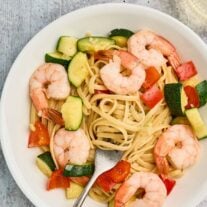
Shrimp and Zucchini Pasta with Bell Pepper
Shrimp and zucchini pasta combines tender shrimp with crisp-tender zucchini, sweet bell pepper, garlic, and onion for a fresh, vegetable-packed pasta dinner that's ready in less than 45 minutes.
Servings: 4 servings
Ingredients
- 3/4 lb zucchini about 3 small
- Salt and freshly ground black pepper
- 3 tablespoons extra virgin olive oil plus more if needed
- 1/2 cup chopped onion
- 4 cloves garlic minced
- 1 red bell pepper cored, seeded, and cut into 1/2-inch pieces
- 1/3 cup low-sodium chicken broth
- 8 ounces pasta linguine, spaghetti, rotini, or cavatappi
- 1 lb shrimp (jumbo or extra-large) peeled and deveined (see notes)
Instructions
- Trim the ends from the zucchini and quarter them lengthwise. Arrange the pieces on paper towels, sprinkle lightly with salt, and let stand for at least 15 minutes to draw out excess moisture. Meanwhile, bring a large pot of salted water to a boil for the pasta.
- Pat the zucchini dry with paper towels and cut it into small cubes. Set aside with the red bell pepper.
- Heat the olive oil in a large skillet over medium heat. Add the onion and cook until softened and translucent, 3 to 4 minutes. Stir in the garlic and cook just until fragrant, about 1 minute.
- Add the zucchini and bell pepper and sauté, stirring often, until the vegetables are crisp-tender, about 4 minutes. Season to taste with salt and pepper.
- Once the water reaches a boil, cook the pasta according to package directions until al dente.
- Increase the heat under the vegetables to medium-high. Pour in the chicken broth and toss to combine. Arrange the shrimp in a single layer over the vegetables, cover, and cook until they're opaque and the thickest part turns milky white, 2 to 3 minutes. Remove the pan from the heat, taste, and adjust the seasoning if needed.
- Drain the pasta and combine it with the shrimp, vegetables, and all of the pan juices. Toss until evenly combined. If the pasta seems dry, drizzle with a little extra olive oil before serving.
Notes
Preparing the shrimp: Leaving the tails on the adds a little extra flavor while they cook and makes for a more attractive presentation. For everyday family meals, though, you may prefer to remove them first so they're easier to eat with the pasta.
Knowing when shrimp are done: Cooking time can vary depending on the size of your shrimp and the heat of your pan, so rely on visual cues as well as timing. They're done when the flesh turns opaque and the thickest part is milky white. If the shrimp become bright white throughout, they're likely overcooked.
Nutrition
Calories: 421 | Total Fat: 13g | Cholesterol: 143mg | Sodium: 951mg | Carbohydrates: 51g | Fiber: 4g | Sugar: 6g | Protein: 25g