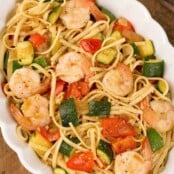
Pasta with Shrimp and Zucchini
This one-dish pasta dinner is made with shrimp, zucchini and red bell pepper sautéed in olive oil, flavored with garlic and onion and tossed with linguine.
Servings: 4 servings
Ingredients
- 1 lb shrimp (jumbo or extra-large) peeled and deveined, tails left on (see notes)
- 3/4 lb zucchini about 3 small
- 1 red bell pepper cored, seeded, and cut into 1/2-inch pieces
- Salt and freshly ground black pepper
- 8 ounces pasta linguine, spaghetti, rotini, or cavatappi
- 3 tablespoons extra virgin olive oil plus more if needed
- 1/2 cup chopped onion
- 4 cloves garlic minced
- 1/3 cup low-sodium chicken broth
Instructions
- Trim the ends from the zucchini and quarter them lengthwise. Lay the pieces on paper towels, sprinkle with salt, and set aside for at least 10 minutes. (This will draw out excess moisture and keep the zucchini firm when sautéed.)
- Blot the moisture from the zucchini using additional paper towels, then cut them into small cubes. Set aside with the red bell pepper.
- Put a pot of salted water on to boil for the pasta.
- Heat the olive oil in a large frying pan over medium heat. Add the onion and sauté until soft and translucent, 3 to 4 minutes. Stir in the garlic and cook just until fragrant, 1 minute longer.
- Add the bell pepper and zucchini and sauté, stirring often, until the vegetables are crisp-tender, about 4 minutes. Season to taste with salt and pepper.
- Start the pasta cooking and raise the heat on the vegetables to medium-high. Drizzle with the chicken broth, add the shrimp, and combine. Tip: Arranging the shrimp in a single layer will ensure uniform cooking.
- Cover the pan and cook just long enough for the shrimp to firm up and turn milky white, 2 to 3 minutes (see notes). Remove the pan from the heat, taste and adjust the seasoning as needed.
- Once the pasta is cooked, drain it and return it to the pan. Add the shrimp, vegetables, and all the pan juices. Toss to combine, and add a little extra olive oil if necessary. Serve immediately.
Notes
ABOUT THE SHRIMP: We recommend leaving the tails on shrimp, both for appearance and the little bit of extra flavor they add during cooking. However, when serving something like a pasta or rice dish for an everyday meal, you can remove them first so no one has to fuss with them at the table.
HOW TO TELL WHEN SHRIMP ARE DONE: Recipe instructions can't completely account for the heat of your pan or the exact size of your shrimp, so use those instructions as a guideline, but keep a close watch on your shrimp as they cook. They're done when the shells and colored parts of the bodies turn a bright coral color, and the flesh is milky white. If they're cooked to the point that they're bright white, they've probably gone too long.
Nutrition
Calories: 421 | Total Fat: 13g | Cholesterol: 143mg | Sodium: 951mg | Carbohydrates: 51g | Fiber: 4g | Sugar: 6g | Protein: 25g